Copyright Basics for Reusing Instagram Sounds
By the SaveInstAudio team · Published · 6 min read
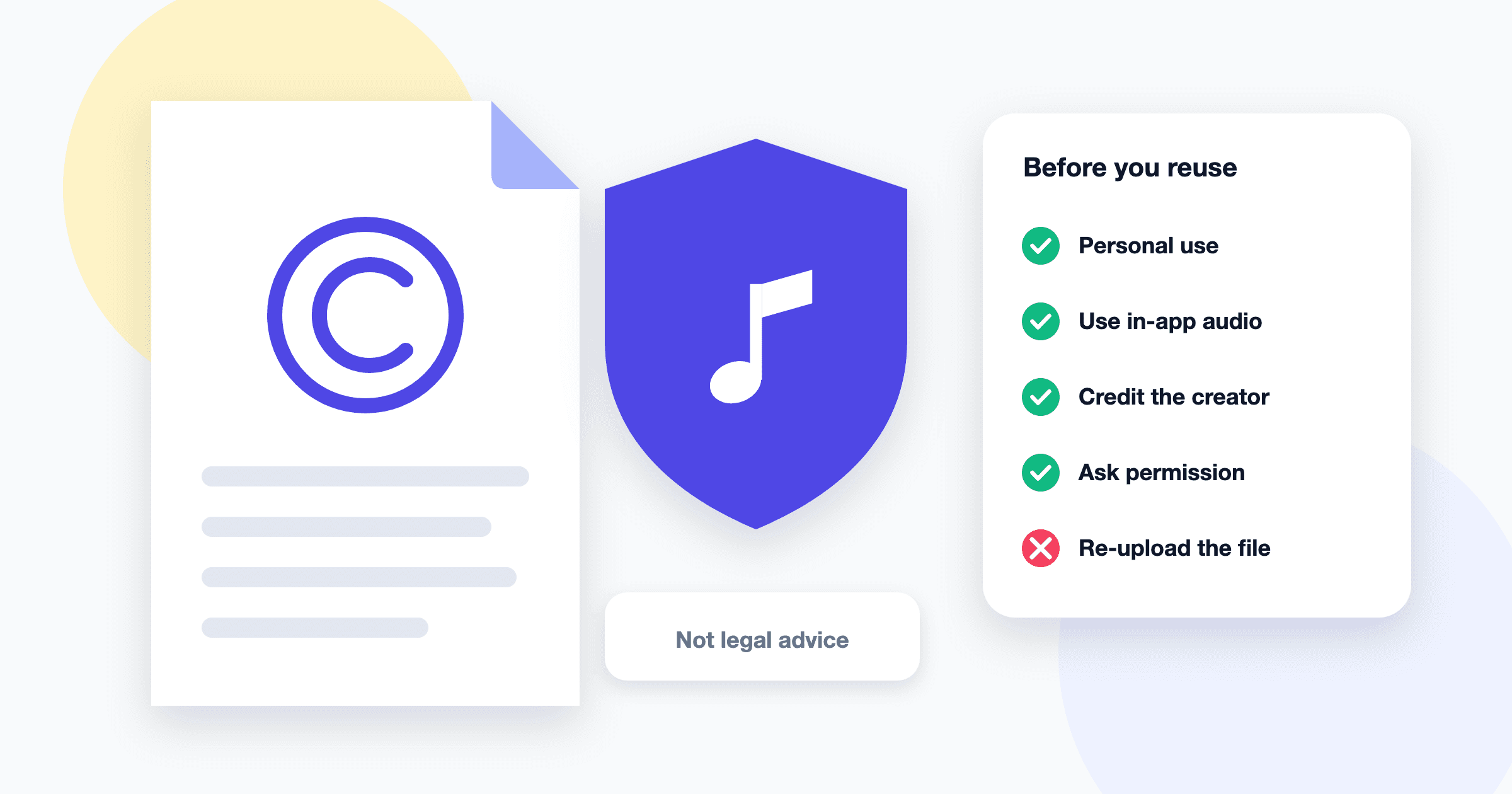
Sounds travel fast on Instagram. A clip goes viral, thousands of creators use it, and before long it shows up in YouTube videos, TikToks and podcasts. Not all of that reuse is allowed, and the rules aren’t obvious. This guide explains the basics so you can make better decisions about the sounds you save.
This is general information, not legal advice. Copyright law differs between countries, and if money or a real dispute is on the line, talk to a qualified lawyer.
Who Owns the Sound in a Reel
A single Reel can involve several separate rights holders, and it helps to pull them apart.
The Composition and the Recording
A commercially released song usually has two copyrights:
- The composition: the melody and lyrics, typically owned by the songwriters and their music publishers.
- The sound recording: the specific recorded performance, often called the master, typically owned by the artist or their record label.
Using a song means touching both. A cover version avoids the original recording but still uses the composition, which is why covers need licensing too.
A Creator’s Original Audio
When a Reel is labeled as original audio, it usually means the creator recorded it themselves: a voiceover, a joke, a sound effect, or their own music. In most countries, that creator owns the copyright in their recording automatically, the moment they make it. No registration or copyright symbol is required.
Be careful, though. Some clips tagged as original audio are really a copyrighted song recorded off a speaker or sped up. The label doesn’t change who actually owns the underlying music.
Instagram’s Licensing vs. Using a File Elsewhere
When you pick a song from Instagram’s built-in music library inside the app, you’re relying on licensing arrangements Instagram has with rights holders. Those arrangements come with conditions: availability can vary by country and account type, and business accounts often have a more limited catalog.
The key point is that this permission lives inside the app. It covers using the sound through Instagram’s own tools on Instagram. It does not travel with a downloaded file. If you save a trending song as an MP3 and add it to a YouTube video, a podcast, an ad or a TikTok, Instagram’s deal with the label doesn’t cover you there. That platform may have its own licensing, or it may not.
Personal Use vs. Republishing
Most everyday reasons for saving a sound involve no publishing at all:
- Listening to a clip offline
- Practicing a dance or a song
- Studying a voiceover’s pacing or a beat’s structure
- Keeping a reference for a project you’re planning
- Sharing a sound privately with a friend to identify it
Republishing is different. Once you upload audio you don’t own to a public channel, especially a monetized one, you’re distributing someone else’s work, and that’s where copyright problems start.
SaveInstAudio is meant for personal use, such as offline listening, practice and reference. If you believe content saved with our tool infringes your rights, see our DMCA policy. When you do want to reuse a sound publicly, the sections below cover your options.
Fair Use and Fair Dealing, Briefly
Many creators assume “it’s only 15 seconds” or “I gave credit” makes reuse legal. Neither is a rule anywhere.
In the United States, fair use is a defense that courts weigh case by case using four factors: the purpose of the use (commentary, criticism, parody and teaching lean favorable), the nature of the work, how much was used, and the effect on the market for the original. Transforming the material, such as analyzing a song’s production in a tutorial, tends to help. Using a hit song as background music for a lifestyle Reel generally doesn’t.
Countries such as the UK, Canada and Australia use fair dealing, which is usually narrower and limited to listed purposes like criticism, review, news reporting, research or parody. Other countries have their own exceptions.
Two practical realities matter even when you have a good argument. First, fair use is decided after a dispute, not before. Second, automated systems that scan uploads don’t evaluate fair use; they just match audio.
Permission, Credit and Royalty-Free Alternatives
Asking for Permission
For a creator’s original audio, the simplest path is often a direct message: say what you’d like to use, where it will appear, and whether the video is monetized. Save the written reply. Independent creators frequently say yes, especially if you tag them.
For commercial songs, permission usually runs through publishers and labels, and sync licenses for videos can be expensive or slow. For most individual creators, that means using platform-licensed music inside the app or choosing a different track.
Giving Credit
Credit is good manners and helps the original creator, so always tag them and name the sound. Just remember that credit is not a license. “No copyright infringement intended” in a caption doesn’t change anything legally.
Royalty-Free and Licensed Libraries
If you need music that works across platforms, consider:
- Music libraries built into video editors, used within their stated terms
- Subscription stock music services that license tracks for online video
- Creative Commons music, checking whether the license requires attribution or forbids commercial use
- Public domain compositions performed in recordings you’re allowed to use
- Commissioning or making your own audio
Read the license each time. “Royalty-free” means you don’t pay per use, not that there are no rules.
What Happens When a Sound Gets Flagged
Platforms, including Instagram, use automated matching to detect copyrighted audio. When a match is found, results vary by platform, rights holder and region, but common outcomes include:
- The audio is muted, sometimes with an option to swap in a licensed track
- The post’s visibility is limited in certain countries
- Monetization is blocked or revenue goes to the rights holder
- The post is removed after a formal takedown notice
- Repeated violations lead to account restrictions
If you believe a claim is wrong, for example because you licensed the track or it’s your own recording, most platforms offer a dispute or appeal process. Keep receipts, license files and permission messages somewhere you can find them. If a sound suddenly stops working in your drafts, our post on fixing Instagram Reels audio that isn’t available explains common causes.
A Practical Checklist Before You Reuse a Sound
- Identify the source. Is it a commercial song, a creator’s original audio, or something you made?
- Decide where it’s going. Private use, Instagram through the in-app sound, or another platform?
- Stay in the app when you can. Using the sound through Instagram’s own tools is the lowest-risk way to join a trend on Instagram.
- Get permission for anything else. Ask original-audio creators directly and keep the reply.
- Credit every time. Tag the creator and name the sound, knowing credit alone isn’t permission.
- Be honest about fair use. Commentary or teaching may qualify; background music usually won’t.
- Have a backup track. Pick a royalty-free alternative in case the original gets muted.
- Keep records. Licenses, receipts and messages make disputes much easier.
Saving a sound for yourself is a good starting point. Once you know which audio you want, you can save the audio from an Instagram Reel as an MP3 for offline listening and practice, then decide how, and whether, to reuse it publicly.